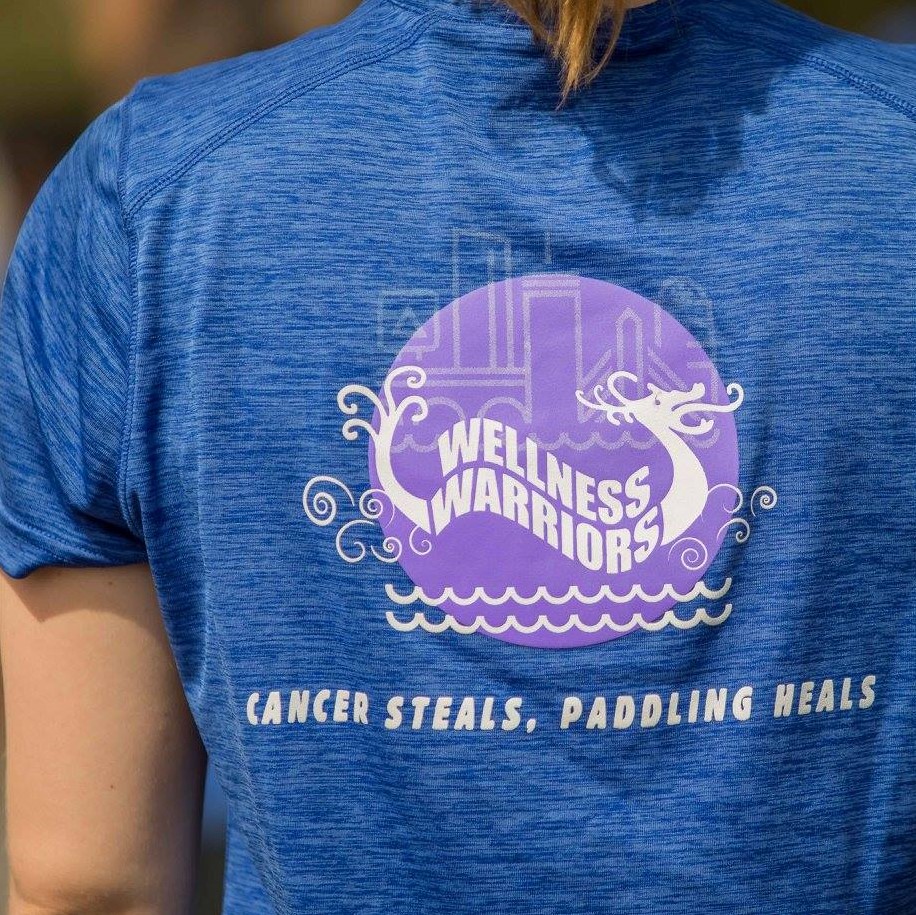



Below is a list of links that relate to cancer survivors and dragon boat paddling:
All articles are linked to the specific reference at the U.S. National Library of Medicine.
Qualitative Health Research. 2008 Feb; 18(2):222-33.
The Contribution of Dragon Boat Racing to Women’s Health and Breast Cancer Survivorship
Parry DC.
Department of Recreation and Leisure Studies, University of Waterloo, Waterloo, Ontario, Canada.
Survivorship is one of the least studied and thus least understood aspects of a breast cancer experience. Defined as a life-long, dynamic process, survivorship begins when people have completed medical treatment for breast cancer, yet live with the memories of their treatment and the possibility of a cancer reoccurrence. The numbers of women surviving breast cancer are growing, which means research on survivorship is imperative. In this article, I examine dragon boat racing (DBR) for breast cancer survivors. DBR has been adapted to a woman-centered, community-based leisure pursuit focused on life after medical treatment for breast cancer. Active interviews with 11 participants revealed that DBR contributes to women's social, emotional, physical, spiritual, and mental health. In turn, feeling healthy in these five dimensions enhanced the women's survivorship of breast cancer. The findings demonstrate the roles of leisure in the health and well-being of women who are breast cancer survivors.
PMID: 18216341 [PubMed - indexed for MEDLINE]
Health Care Women International 2007 Feb; 28(2):122-40.
Survivor dragon boating: a vehicle to reclaim and enhance life after treatment for breast cancer
Mitchell TL, Yakiwchuk CV, Griffin KL, Gray RE, Fitch MI.
Department of Psychology, Wilfrid Laurier University, Waterloo, Ontario, Canada.
The authors investigated the psychosocial impact of dragon boat participation on women who have been treated for breast cancer. Open-ended qualitative interviews were completed by 10 new members recruited from two breast cancer survivor dragon boat teams. Our findings indicate that the women's experience of survivor dragon boating surpassed their expectations and offered them hope and increased strength and the ability to regain control of their lives. Key themes emerging from the in-depth interviews that encapsulate the experiences of women in their first season of dragon boating follow: awakening of the self, common bond, regaining control, being uplifted, and transcending the fear of death. The interview data support the emerging hypothesis that dragon boating is a vehicle for improving women's wellness and post-treatment quality of life.
PMID: 17364976 [PubMed - indexed for MEDLINE]
Canadian Journal of Occupational Therapy. 2004 Jun;71(3):138-49.
In the eye of the dragon: women’s experience of breast cancer and the occupation of dragon boat racing.
Unruh AM, Elvin N.
School of Health and Human Performance, Dalhousie University, Halifax, NS.
BACKGROUND: Women with breast cancer are at risk of developing lymphedema following surgical and/or medical treatment of the disease. Recently, women have challenged traditional advice about limiting upper extremity activity to prevent lymphedema by participation in dragon boat racing. PURPOSE: In this qualitative pilot study, three women were interviewed about the meaningfulness of dragon boat racing in their lives. METHODS: The women were interviewed twice and their interviews analyzed using thematic analysis. RESULTS: Seven themes are discussed: attraction of dragon boat racing; physical and emotional well-being; competition; social support; transcendence/connectedness/oneness; re-occurrence of cancer; and, public awareness. Competition enabled the participants to rebuild self-confidence and to regain control over their physical health and emotional well-being. Balancing support and competition was key to finding satisfaction in this occupation. The women did not believe that dragon boat racing affected their risk for developing lymphedema. PRACTICE IMPLICATIONS: People who engage in the occupation of dragon boat racing find it meaningful and develop new coping strategies. Participating in dragon boat racing can decrease stress and shift the meaning of having breast cancer to a more positive view of the experience.
PMID: 15366630 [PubMed - indexed for MEDLINE]
JSport Exerc Psychol. 2007 Aug;29(4):419-38.
Psychosocial experiences of breast cancer survivors involved in a dragon boat program: exploring links to positive psychological growth.
Sabiston CM, McDonough MH, Crocker PR.
University of British Columbia, Vancouver, BC.
This study explored psychosocial experiences of breast cancer survivors involved in dragon boat programs. Twenty women (M(age) = 58.69, SD = 6.85) were interviewed for 45-60 min about their experiences as members of survivor dragon boat teams. Interviews were analyzed using constructivist grounded theory methods. The dragon boat program facilitated social support from women with common challenges and a shared understanding of survivorship. It also provided opportunities to (re)gain a sense of personal control, develop new identities as athletes, and overcome physical challenges. Together these elements contributed to positive psychological growth and linked to the literature on posttraumatic growth. Future physical activity interventions targeting breast cancer survivors may benefit from developing strategies that share key characteristics of dragon boating.
PMID: 17968046 [PubMed - indexed for MEDLINE]
Canadian Medical Association Journal. 1998 Aug 25;159(4):376-8.
Abreast in a boat—a race against breast cancer (full article)
PMID: 9732719 [PubMed - indexed for MEDLINE]
|